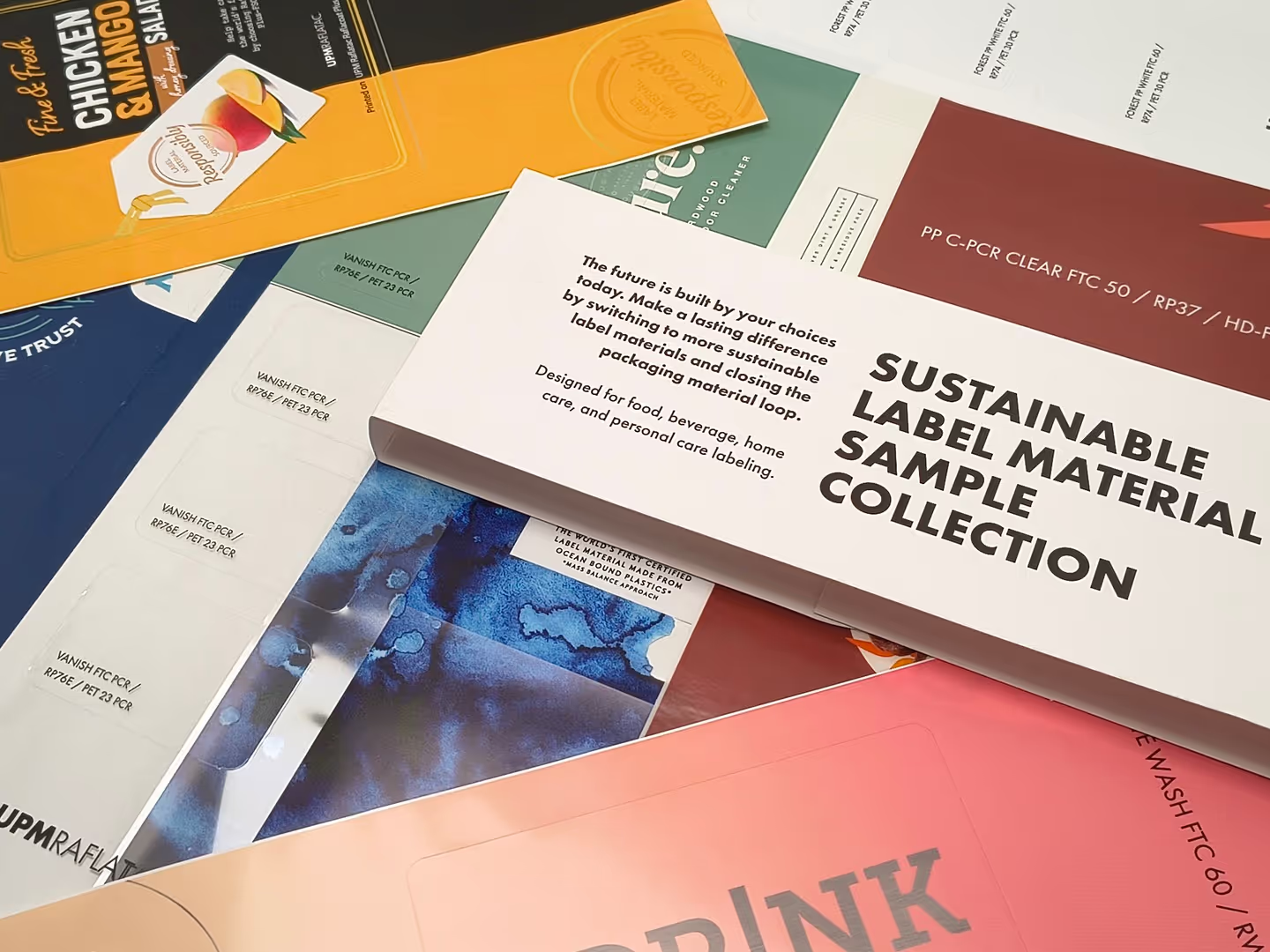



Not all product labels are created equal. Some must withstand exposure to heat, chemicals, or repeated handling. Others need to accommodate multiple languages or pages of regulatory content without overwhelming the design. In every case, structure matters. When you need additional space without adding extra packaging, two solutions stand out: booklet labels and peel-off labels.
Both belong to the family of extended content labels (ECL), but each serves a slightly different purpose.
So how do you decide which one is right for your product?
This guide explains the distinctions, strengths, and ideal applications of each option.
Why label structure matters
A label is more than decoration – it is a functional component of your packaging. Its structure determines:
- how much information it can contain;
- how users interact with it;
- how durable it is during storage and use; and
- how much it costs to produce at scale.
Choosing the wrong label type can lead to compliance issues, poor user experience, or unnecessary expense.
Choosing the right one can streamline production and strengthen brand credibility.
What is a booklet label?
A booklet label is a multi-page construction that adheres directly to the product surface.
It resembles a miniature booklet – often folded or bound – laminated onto a base label.
Booklet labels are used when large volumes of information are required, such as:
- regulatory information,
- safety data,
- instructions for use,
- multilingual content,
- extended brand, or
- sustainability messaging.
Depending on the format and folding style, they can range from a few panels to dozens of pages.
Advantages of booklet labels
- Exceptional content capacity. Some designs can accommodate the equivalent of a small leaflet, with up to 50 printed panels.
- Durability. Bound booklets withstand moisture, abrasion, and repeated opening.
- Compliance readiness. Ideal for pharmaceuticals, agrochemicals, and industrial products requiring safety data sheets (SDS).
Disadvantages of booklet labels
- Higher production costs.
- Greater thickness, which may not suit very small containers.
- Requires more advanced application equipment.
What is a peel-off label?
A peel-off label, sometimes referred to as a peel-back, multi-layer, or smooth-peel label, consists of two or more layers that can be opened and reclosed.
The top layer peels away from the base to reveal additional printed information underneath.
Peel-off labels are ideal when you need a moderate amount of extra space for:
- promotions and coupons,
- multilingual ingredient lists,
- small-scale compliance information,
- QR codes or campaign links.
They combine flexibility with simplicity, offering a clean aesthetic while doubling or tripling the available print area.
Advantages of peel-off labels
- Compact and elegant. They maintain a minimalist appearance on the front panel.
- Lower cost. They require less material and production time than booklet labels.
- Easy to open and close. This improves user experience, particularly for consumer goods.
- Design versatility. Suitable for both compliance and marketing applications.
- Compatibility with curved surfaces. Ideal for bottles, jars, and tubes.
Disadvantages of peel-off labels
- Less durable in harsh industrial environments.
- Not ideal for long-term outdoor use or exposure to chemicals.
Booklet labels vs peel-off labels: a comparison
Both solutions are effective – but each excels under different conditions. The right choice depends on the volume of information, environmental exposure, and intended product use.
When to choose a booklet label
Booklet labels are best suited to technical or heavily regulated products that must carry large amounts of legally required information.
Consider a booklet label if:
- you need to include information in multiple languages or jurisdictions on a single package;
- your product requires safety data sheets, dosage tables, or extensive instructions for use;
- you want to present rich information without cluttering the front panel.
Industries such as pharmaceuticals, industrial chemicals, and agrochemicals rely on booklet labels because they offer durability and high data density.
When to choose a peel-off label
Peel-off labels are versatile, easy to produce, and ideal for everyday consumer interaction.
Choose a peel-off label if:
- you need additional space for information, promotions, recipes, or loyalty codes;
- your packaging is small, flat, or curved, such as bottles, jars, or shaped containers;
- you sell in multiple markets with a moderate amount of multilingual content;
- you want to introduce an interactive element, such as a QR code, competition, or discount;
- you value a minimalist appearance while maintaining regulatory compliance.
Peel-off labels are common in food, cosmetics, and household chemicals, where clarity and ease of use are essential.
How to decide which format suits your product
Before selecting a label structure, consider the following key questions:
How much information must appear on the product itself?
If the content exceeds one or two languages or requires multiple panels of text, a booklet label is likely the better option.
How will consumers use the product?
If they will refer to the label repeatedly, such as for dosage instructions, choose a booklet. If they need quick, one-time access, such as for a coupon, choose a peel-off label.
What is the budget and print volume?
Peel-off labels are more cost-effective for high-volume consumer products, while booklet labels justify higher unit costs where information density is critical.
What impression should the label convey?
Booklet labels suggest depth and completeness. Peel-off labels convey slimness and modernity.
When in doubt, consult your label supplier early in the design process. This helps balance ambitious design goals with production realities.
Practical examples
Each example shows how the right label format can transform packaging from a limitation into a communication asset.
Cost and efficiency considerations
Although booklet labels are generally more expensive to produce, they often reduce total packaging costs by eliminating separate leaflets or multiple SKUs.
Peel-off labels, by contrast, are highly efficient for short production runs or frequent design changes.
True savings come from:
- reduced packaging materials,
- simplified inventory management,
- lower risk of regulatory penalties, and
- faster time to market.
In both cases, automation-friendly label construction ensures reliable application at high speeds.
Final thoughts
Both booklet labels and peel-off labels play a vital role in modern packaging. The former maximises information capacity; the latter maximises design flexibility.
Choosing the right option is not merely an aesthetic decision – it is about balancing function, compliance, and user experience.
When executed well, both formats can transform a simple product label into a powerful tool for communication and compliance. The difference lies in what you need to say, and how your customers will engage with it.