This announcement bar can be used to inform visitors of something important!


Barcode labels are self-adhesive labels printed with machine-readable 1D or 2D codes. They are used to identify products, track shipments, manage stock, record production data, and support product traceability.
Comex manufactures custom barcode labels on rolls from the ground up. We select the face material and adhesive, prepare and verify the artwork, and print the labels using digital, flexographic, or offset technology. EyeC vision systems inspect 100% of the printed labels to identify inconsistencies and help ensure that every code remains clear and readable.
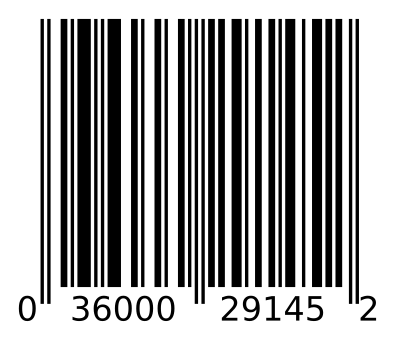
We print commonly used linear and two-dimensional barcode formats. Codes can be identical across the complete production run or generated individually for every label.
■EAN-13 and EAN-8: commonly used for consumer products and retail checkout applications.
■GS1-128: a logistics barcode capable of carrying structured information such as a batch number, expiry date, or Serial Shipping Container Code. It is widely used on logistics labels, cartons, and pallets.
■Code 128 and Code 39: versatile barcode formats used for internal identification, manufacturing, warehousing, asset management, and industrial applications.
■ITF-14: a barcode commonly used to identify trade-item groupings, outer cases, and corrugated shipping cartons.
■GS1 DataBar: a compact family of barcode formats suitable for applications in which packaging space is limited, including selected fresh-food and retail uses.

■QR Code: QR Codes can connect a physical product with digital content such as instructions, product information, promotions, authentication services, or online support. They can also be used in GS1 Digital Link applications, where a structured web address connects a product identifier with digital information and services.
■Data Matrix and GS1 DataMatrix: compact two-dimensional codes used for serialisation, traceability, healthcare, electronics, automotive components, and other applications in which a substantial amount of data must fit within a small area.
GS1 is leading a global transition from barcodes to 2D codes (the 'GS1 Sunrise 2027' initiative). When designing product labels today, it is worth leaving space for a 2D code alongside the traditional EAN. We can advise you on how to prepare your labels for this change.
A barcode is effective only when it can be read reliably at every relevant stage – on the production line, in the warehouse, at the checkout, during sorting, or at the customer’s premises. Several technical factors determine whether a code scans correctly.
■ Print contrast and definition: poor contrast, blurred edges, inconsistent bar widths, or printing defects can reduce barcode readability. Print quality should be appropriate for the barcode type, scanner, substrate, and intended application. Linear and two-dimensional barcode quality can be assessed against recognised standards, including ISO/IEC 15416 for linear codes and ISO/IEC 15415 for two-dimensional codes.
■ Correct dimensions and quiet zones: EAN, GS1-128, Data Matrix, and other barcode formats have defined dimensional and layout requirements. Reducing a code excessively, distorting its proportions, or printing within its quiet zone can prevent reliable scanning. Our pre-press team reviews the code dimensions, placement, contrast, and surrounding clear space before production begins.
■ Materials selected for the application: a barcode label used on a dry cardboard box requires a different construction from one applied to a frozen product, chemical container, reusable transport unit, or outdoor asset. The face material, adhesive, protective coating, and printing method must be selected for the surface and conditions in which the label will be applied, stored, transported, and scanned.
■ Readability throughout the product lifecycle: the code must remain readable from the moment the label leaves the production line until the final required scan. Depending on the application, this may require resistance to moisture, low temperatures, oils, chemicals, abrasion, ultraviolet light, or repeated handling.
Comex controls these parameters during artwork preparation and production. Our vision inspection systems analyse the complete printed run rather than relying solely on occasional manual sampling.

The choice of substrate depends on where and for how long the label is intended to remain legible.
A full range of adhesives – from removable to extremely durable – allows the label to be adapted for use on glass, plastic, metal, cardboard and surfaces with low surface energy.
■Paper labels – the most popular and cost-effective choice for warehouse, logistics and product applications in dry conditions. Available in matt, semi-gloss and gloss finishes, including FSC-certified options.
■Thermal and thermal transfer labels – designed for printing variable data (batch number, date, weight, SSCC code) on the customer’s printers; we select the substrate to suit the specific printer model and ribbon.
■Foil labels (PP, PE, PET) – resistant to moisture, grease, chemicals and low temperatures; suitable for use in cold stores, the chemical industry and on packaging exposed to abrasion.
■Speciality materials – protective laminates, code-fixing varnishes, substrates for deep-freezing, and labels with enhanced adhesion to difficult surfaces.


Barcode labels support the identification and movement of pallets, cartons, containers, storage locations, and individual items. Applications include GS1 logistics labels, SSCC codes, warehouse location labels, picking labels, shipping labels, and returnable asset identification.
Retail applications include product labels with EAN codes, price and weight labels, fulfilment labels, stock-identification labels, and shipping labels. Labels can combine machine-readable codes with branding, product information, and human-readable data.
Food labels can include a product barcode together with variable batch, date, weight, or traceability information. Materials and adhesives can be selected for exposure to moisture, refrigeration, freezing, oils, and repeated handling.
Data Matrix and other serialised codes can be printed for regulated pharmaceutical, medical, and healthcare applications. These projects require precise data management, controlled artwork, consistent printing, and rigorous inspection procedures.
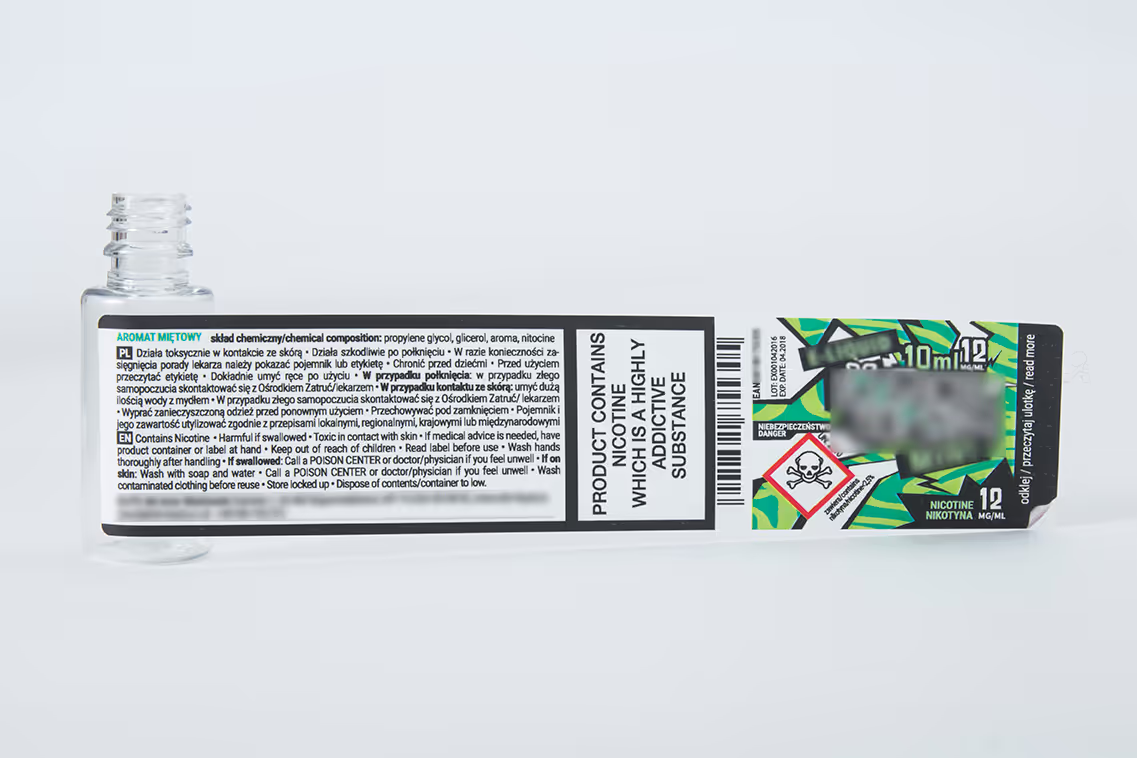
Durable film labels can combine barcodes with product information and required safety content. Materials, inks, adhesives, and protective finishes are selected according to the container and expected chemical or environmental exposure.

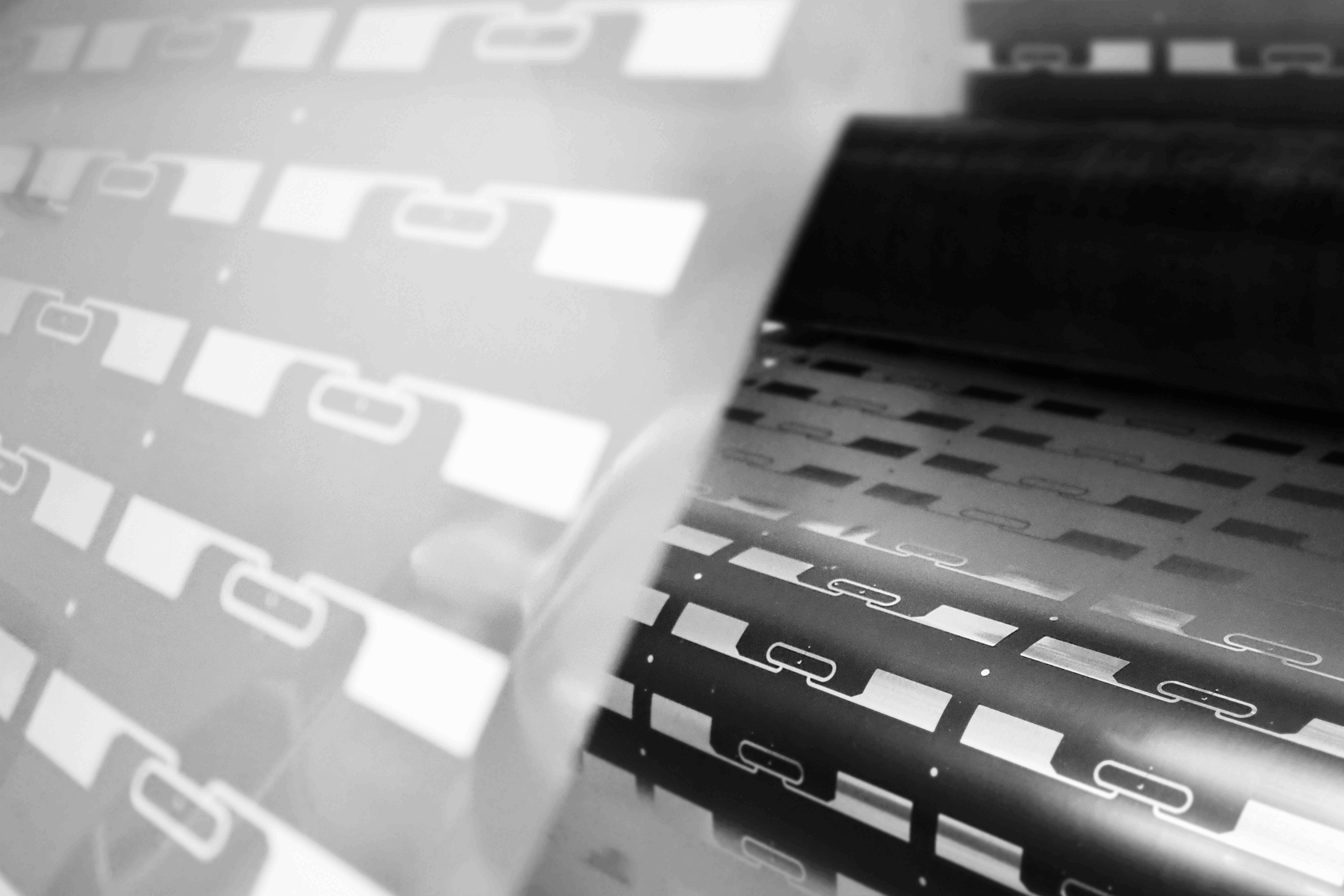
A barcode requires direct line of sight and must be scanned individually. RFID tags allow hundreds of tags to be read simultaneously, without the need for direct line of sight – for example, an entire pallet at a warehouse gate. As one of the few Polish label manufacturers with a complete production line for RFID labels, we can:
■ produce hybrid labels – featuring a printed barcode and an embedded RFID chip in a single label,
■ advise on which processes a barcode is entirely sufficient for, and where RFID will genuinely deliver a return on investment.

This certification confirms our dedication to refining our processes to supply products and services that align with customer expectations and legal obligations.


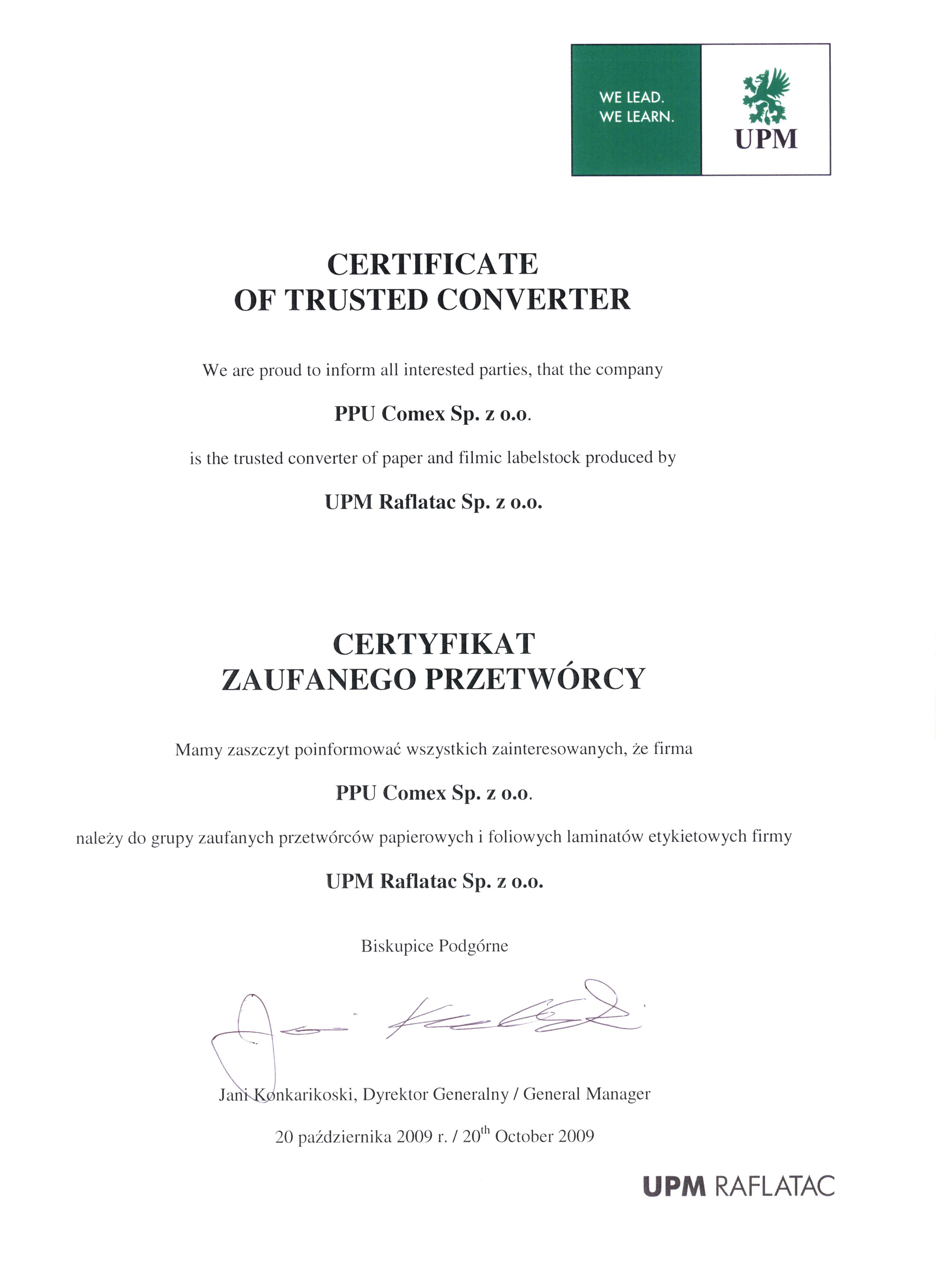
This certification attests to our expertise, and top-notch quality in handling UPM Raflatac products, and our status as a trustworthy and verified partner.
This certification guarantees that the timber resources used in our products are sourced from responsibly managed forests and other verified sources.